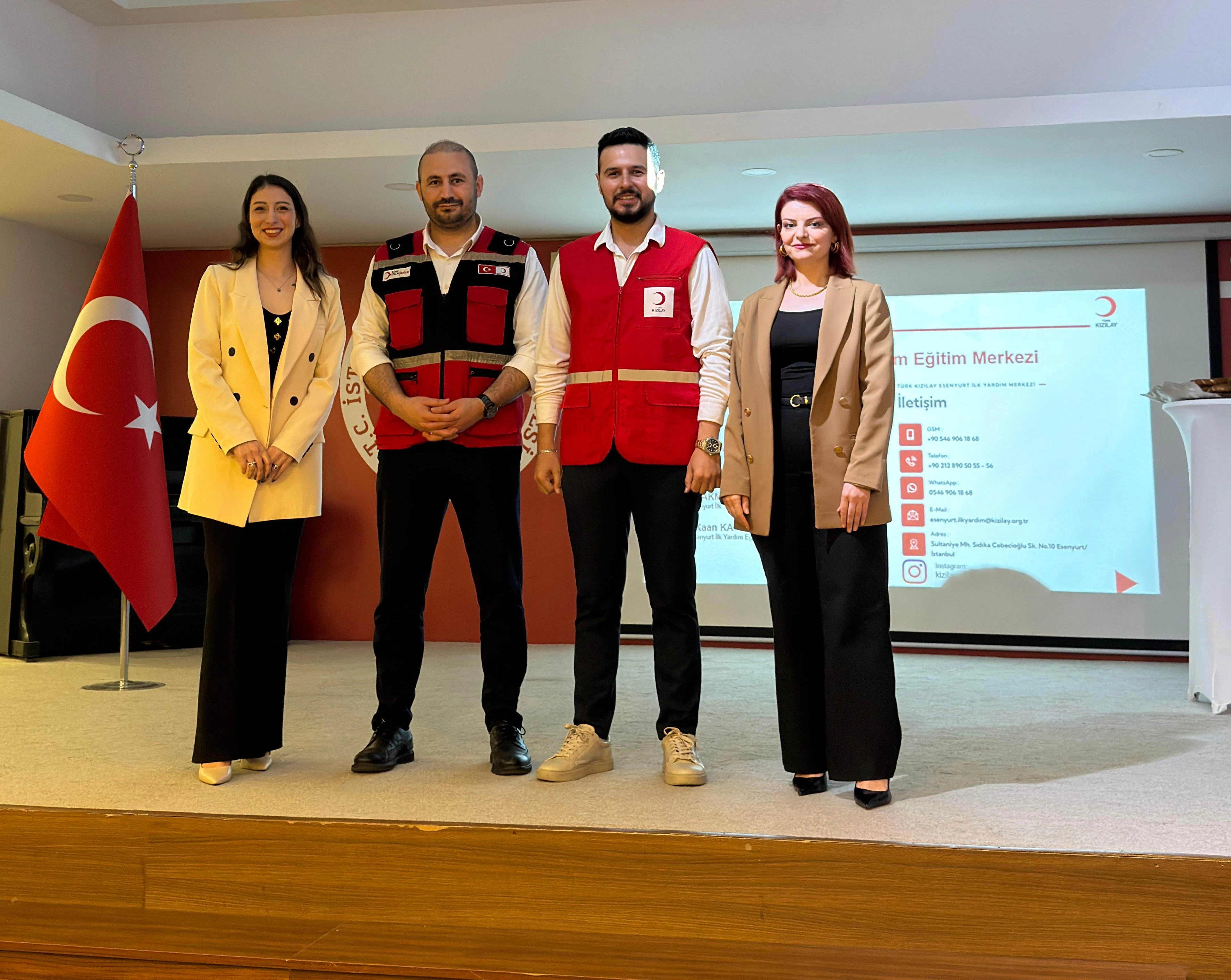
Common Misconceptions in First Aid: Proper Intervention During an Epileptic Seizure practical training event, organized by the Electroneurophysiology and Dialysis programs within the Vocational School of Health Services at Istanbul Rumeli University, was held at the Akın Akkan Conference Hall on the Mehmet Balcı Campus. Coordinated by Lecturer Elif Asena Kantarcı, the event aimed to improve students’ professional intervention skills in emergency situations.
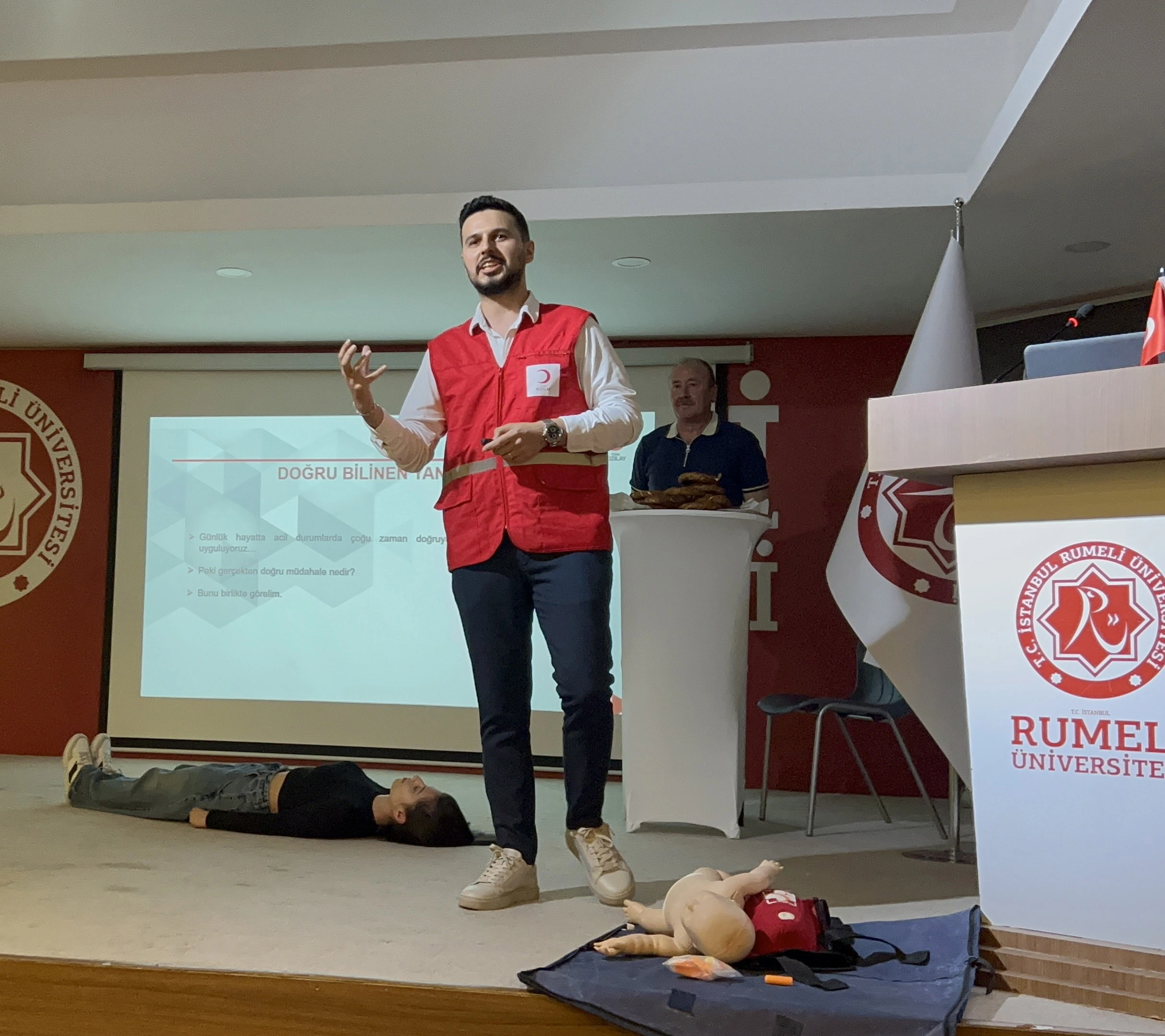
In the opening speech of the event, Kızılay Esenyurt Branch Manager Specialist Barış Çakmar emphasized the critical importance of first aid awareness for public health and drew attention to the consequences of incorrect interventions, especially in life-threatening situations. Kızılay First Aid Instructor Specialist Physiotherapist Lütfü Kaan Kantarcı shared technical details with participants, including how to ensure patient safety during an epileptic seizure, establish environmental safety, and initiate professional emergency assistance procedures.
The most remarkable part of the training was the practical simulation stage, during which students from the Electroneurophysiology and Dialysis programs performed an epileptic seizure reenactment. In this realistic scenario-based simulation, correct and incorrect intervention methods were analyzed live under the guidance of the instructor. Through the interactive question-and-answer session, students were encouraged to put their theoretical knowledge into practice and develop calm and accurate approaches during crisis situations.
As a result of the event, which was attended by academics and many students, strong awareness was raised regarding common incorrect practices in the healthcare field. While the practical simulations increased the permanence of the training, they also contributed to the development of students’ professional self-confidence.